Industry Insights
The Hidden Cost of an Undersized Press
Last updated:
September 7, 2026
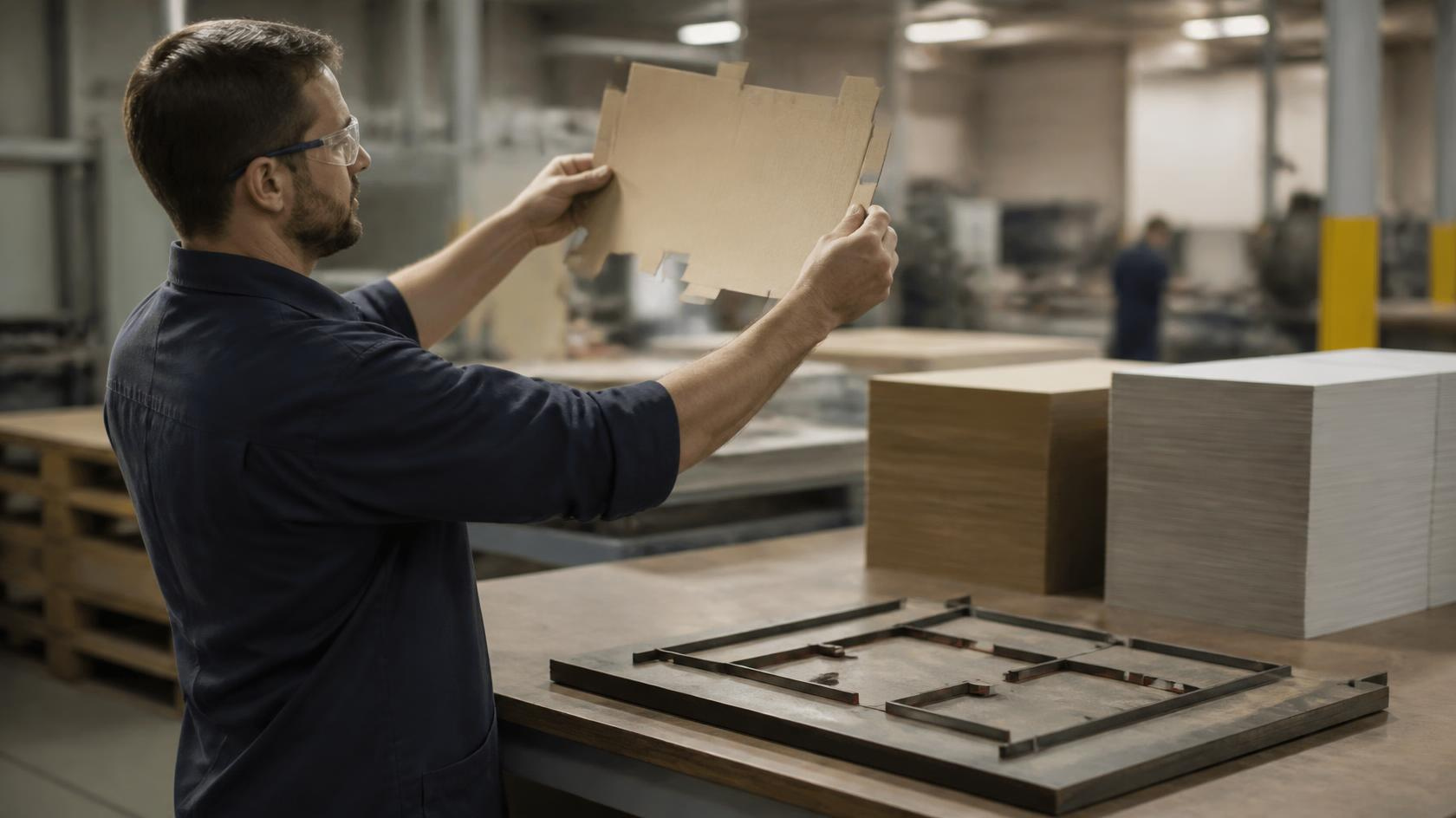

The conversation about capital equipment almost always centers on price. How much does the press cost? What's the lead time? Can we get financing? These are legitimate questions, but they frame the decision incorrectly. The more useful question — the one most buyers don't ask until they've already made the purchase — is what does the wrong press cost to run?
In die cutting and converting, an undersized press doesn't announce itself with a catastrophic failure. It erodes margin quietly: through makeready time, through rejects, through overtime, through jobs that get re-routed or turned away entirely. Over a three-to-five-year horizon, these losses frequently exceed the price difference between the press that seemed affordable and the press that was actually right for the work.
An undersized press isn't necessarily a small press. It's a press that's under-specified for the work being asked of it — whether that's insufficient tonnage for the substrate, a format that falls short of the sheet size in the mix, or a configuration that requires workarounds for jobs the machine wasn't designed to handle.
The most common version of this problem in clamshell die cutting is a press purchased for a specific job type that then gets pressed into service for a broader mix of work as the operation grows. What was correctly sized at purchase becomes a constraint two years later, when the shop is running heavier board, more complex dies, or larger format sheets than the machine was specified for.
"In my experience, the shops that struggle most with capacity aren't running the wrong number of machines — they're running the wrong machine for the work. An undersized press costs you more in overtime and rejected cuts than the right press ever would. The capital difference is almost always smaller than people think."
— Rob Weidhaas, Die Cutting Advisors
When a press is running at or near its tonnage or format limit, makeready becomes disproportionately time-consuming. Operators compensate for marginal cutting performance by adding packing, adjusting impression, and running more make-ready sheets than the job should require. On a well-matched press, a skilled operator gets to acceptable cut quality quickly. On an undersized press, makeready becomes a negotiation between operator experience and machine limitation.
In a high-mix, short-run environment — which describes most mid-size packaging and converting operations today — makeready frequency is the primary throughput variable. Even modest improvements in makeready time, multiplied across dozens of job changeovers per week, produce measurable output gains.
Reject rates on an undersized press are rarely zero, and they're rarely reported honestly in production accounting. A cut that's 80% clean gets pulled and reworked; the rework time doesn't always get attributed back to the press that caused it. Over time, this creates a distorted picture of machine performance that makes the undersized press look more productive than it actually is.
The true cost of a reject includes not just the substrate waste but the operator time to identify it, the rework or reprint that follows, and the delay to the downstream finishing operation waiting for clean product. In tight production schedules, a 3% reject rate isn't a 3% efficiency loss — it's a cascading disruption.
One of the genuine advantages of working with an independent equipment advisor rather than a direct manufacturer's sales representative is that the advisor's incentive is to match you to the right machine, not to close a sale on a specific model. If the press that fits your work is larger and more expensive than what you budgeted, a good advisor tells you that — along with the math that explains why the investment recovers itself.
DCA works through the production economics with buyers before any equipment decision is made. That conversation is free, and it frequently changes the outcome in ways that matter well beyond the initial purchase.
.png)