Application Guides
How to Spec a Clamshell Press for Rigid Box Production
Last updated:
September 9, 2026
.png)

Rigid box production places specific demands on a clamshell press that differ meaningfully from folding carton or standard packaging work. The substrates are heavier, the tolerances are tighter, the job economics reward precision over raw speed, and the downstream assembly process is less forgiving of dimensional variation. Speccing a clamshell press for rigid box production requires working through a set of variables that don't always appear on a standard equipment checklist.
Rigid box production typically runs on chipboard, greyboard, or heavy-caliper specialty stock in the range of 60 to 120+ points of caliper. Cutting these materials cleanly requires more tonnage per die area than standard folding carton — and the dies tend to be simpler (fewer cut feet of rule), which means the force is concentrated rather than distributed.
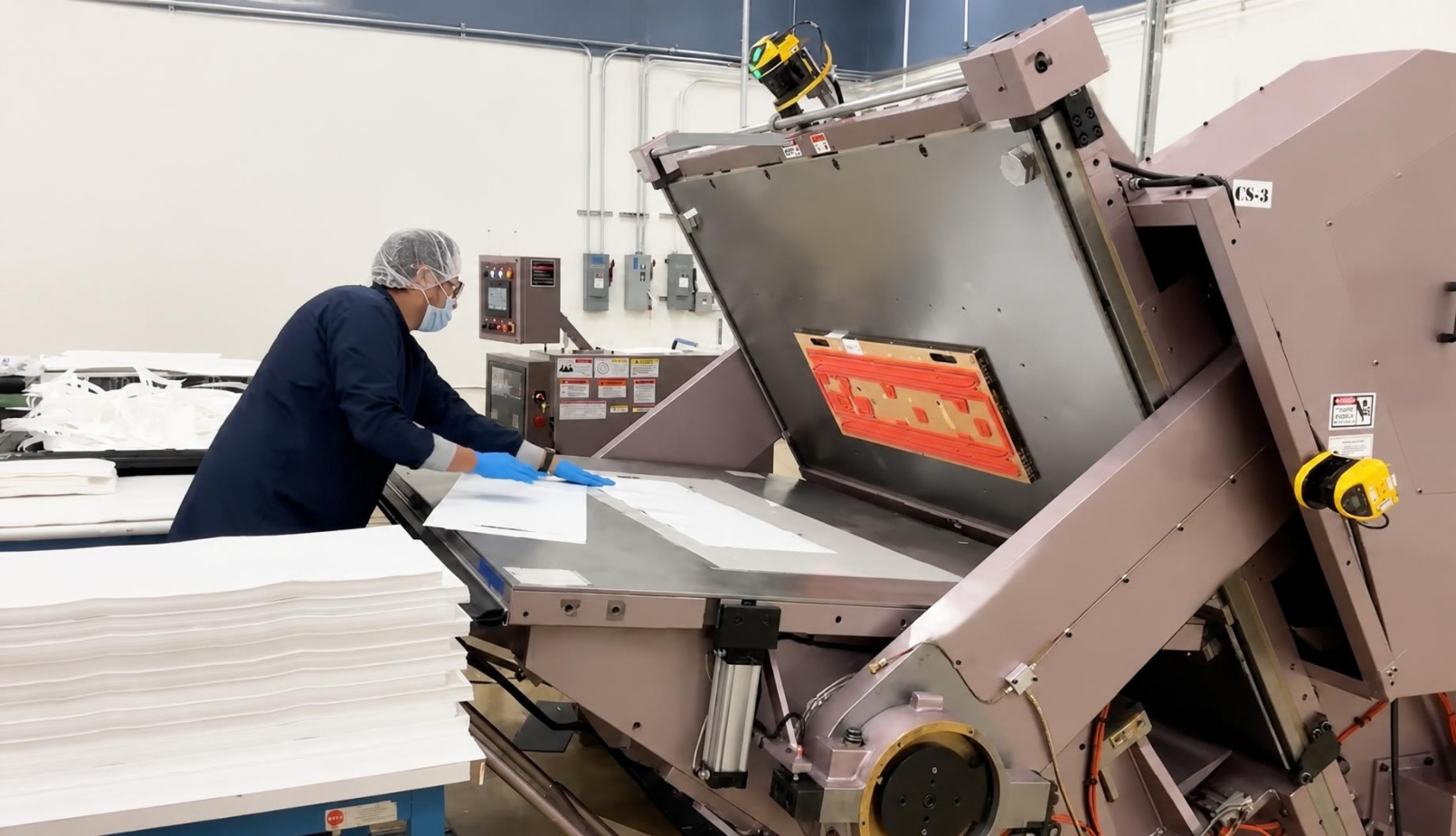
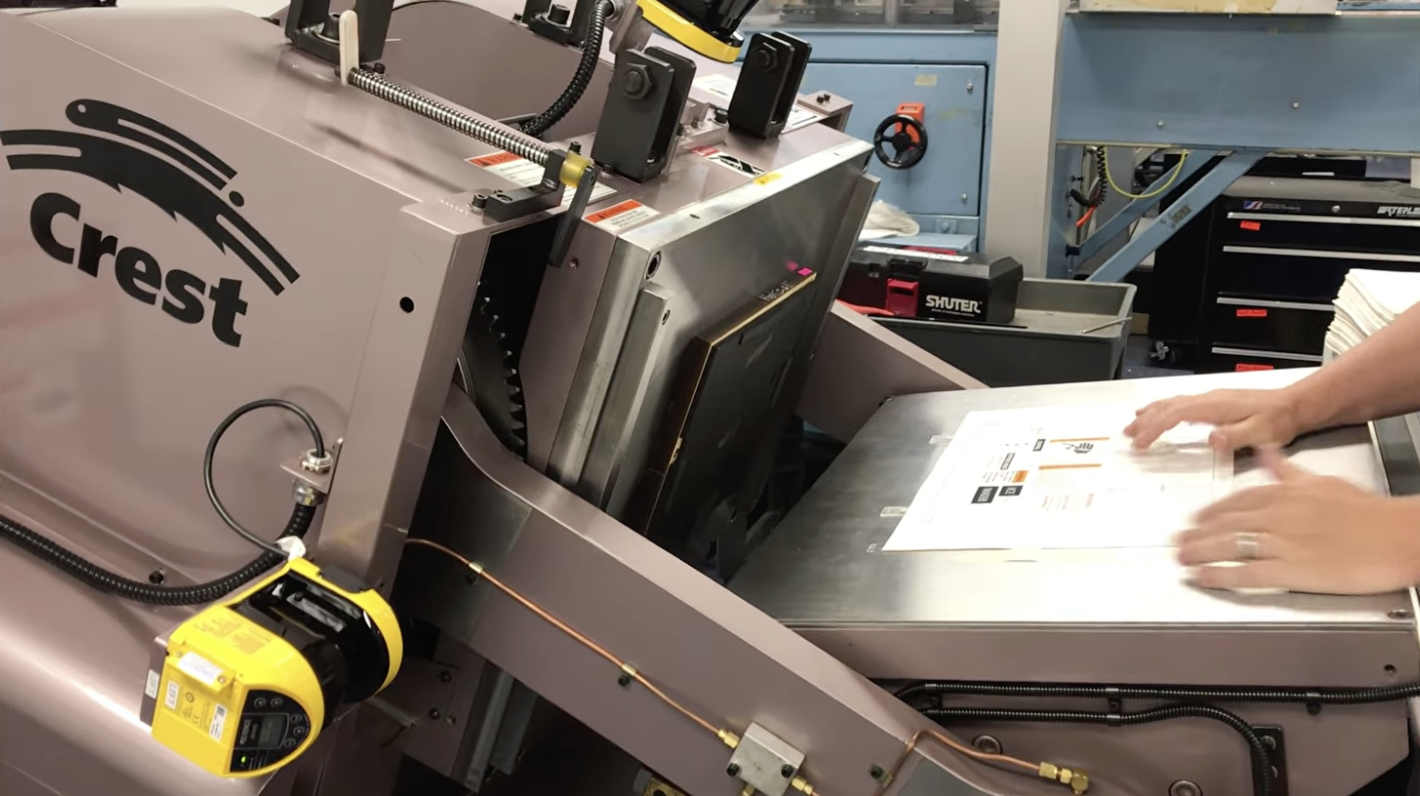
For most rigid box formats, the Crest Small or Medium configuration (260–450 tons) provides sufficient cutting force. The key is to calculate required tonnage based on the actual rule footage in your typical die, not the press's maximum rating. A press with adequate tonnage for your die geometry is more important than buying the highest-tonnage machine available.
Rigid box blanks have tight tolerances because they assemble into a three-dimensional structure. A cut that's 0.5mm off in one corner of the blank will affect how the box assembles and how it fits a lid. Platen parallelism, the degree to which the two press platens remain parallel to each other throughout the cut cycle, directly affects dimensional consistency across the die area.
When evaluating any press for rigid box production, request test cuts on a representative die and measure the cut dimensions at multiple points across the sheet. Variation in cut depth or dimensional accuracy across the platen is a signal of parallelism issues that will affect every job the machine runs.
Rigid box blanks typically require clean stripping — the waste matrix must separate from the blank without tearing, dragging, or distorting the cut edges. This is particularly important for blanks with tight corner geometry or small interior knockout areas.
Press speed, rubber ejection placement, and rule bevel selection all affect stripping performance on heavy board. Before commissioning a press for rigid box production, run a stripping evaluation on your most complex die geometry at production speed. If stripping is inconsistent at speed, diagnose the cause before the machine goes into regular production — it's much easier to address during commissioning than after the press is in active use.
Rigid box formats are often smaller than folding carton formats, but they're not always. Larger gift boxes, decorative trays, and specialty rigid structures can approach the format limits of a small or medium press. Map your anticipated job mix, current and projected, against the format range of any press you're evaluating, with specific attention to your largest expected blank size.
If your mix includes both small luxury boxes and larger format rigid structures, the Medium Crest's additional format headroom is worth evaluating against the Small configuration's lower capital cost.
Die cutting is one step in a rigid box production sequence that typically includes wrapping, lid assembly, insert placement, and final inspection. The press doesn't exist in isolation — its output feeds everything downstream.
When speccing the press, think about the physical output: how blanks come off the press, how they're transferred to the next operation, and what throughput rate the assembly line can absorb. A press that cuts faster than the assembly line can process creates a staging problem that no amount of press optimization resolves. The right press spec accounts for the whole production system, not just the cutting station.
DCA has worked with rigid box operations across a range of production scales and can help you think through the full system spec — press, configuration, and downstream integration — before the equipment decision is made.
.png)