Equipment & Technology
Understanding Crest Tonnage: What the Numbers Mean
Last updated:
September 2, 2026


When evaluating a clamshell die cutting press, tonnage is one of the first specifications buyers focus on — and one of the most frequently misunderstood. Higher tonnage sounds like more capability, and in some respects it is. But the relationship between tonnage and real-world cutting performance is more nuanced than a spec sheet suggests. This guide breaks down what tonnage actually measures, how it affects your output, and how to use it as a decision-making tool rather than just a comparison number.
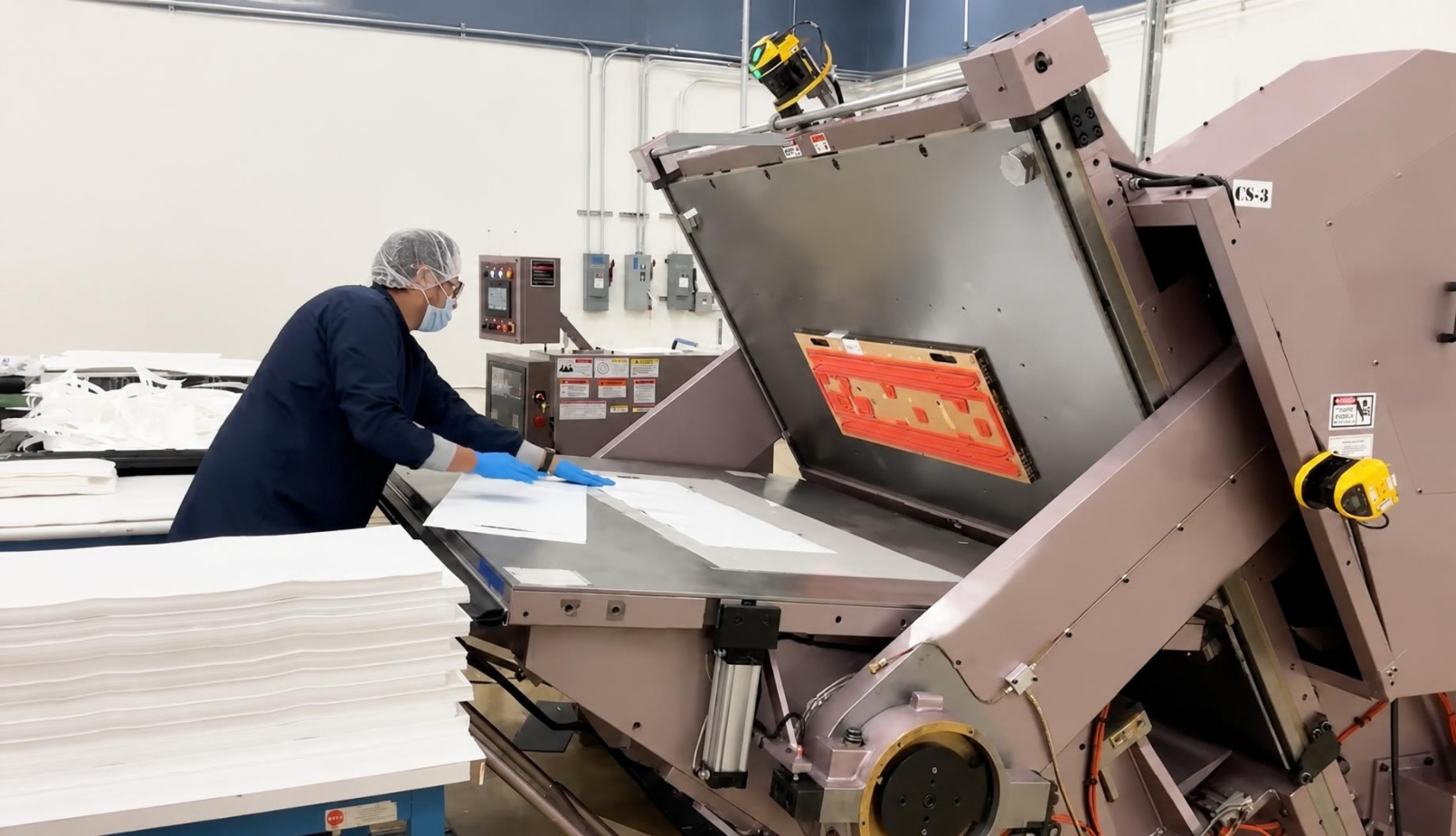
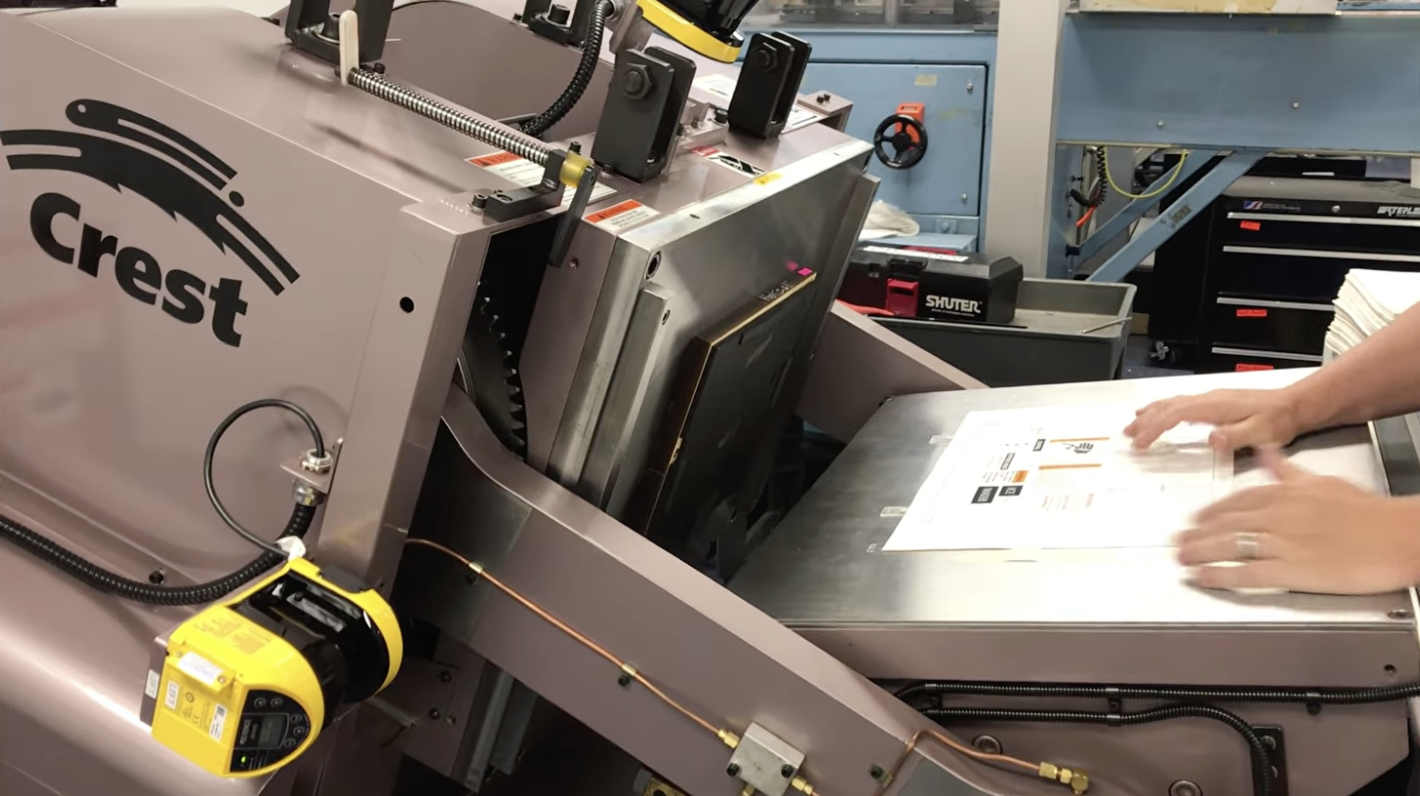
Tonnage in a clamshell platen press refers to the maximum cutting force the machine can apply across the cutting area — measured in tons. For the Crest line, that range runs from 260 tons on the entry-level Small configuration up to 500 tons on the Large format press.
This force is distributed across the full die area, which means the effective pressure per square inch depends on how much of the platen is actually occupied by cutting rule. A small die on a large press delivers very high localized pressure. A large, complex die on the same press distributes that force more thinly. Understanding this relationship is essential to making the right tonnage call for your work.
The primary variables that determine how much tonnage a job requires are substrate type, substrate caliper (thickness), cutting rule linear footage, and die complexity. Heavier board weights and denser materials require more force. A rigid box blank in 36-point board asks for more from the press than a folding carton in 18-point. A full-bleed die with high rule density requires more distributed force than a simple rectangular cut.
Running a job that requires more tonnage than the press can deliver results in incomplete cuts, excessive makeready, and shortened die life. Running a job with significantly less tonnage than the press is rated for isn't wasteful — it just means the machine has headroom you're not using, which is sometimes the right call if future work in that format is anticipated.
The Crest line has demonstrated an 11-to-1 mechanical advantage ratio in testing — meaning the force delivered at the cutting surface is substantially multiplied from the input force at the drive system. This is a function of the press's mechanical design and toggle-point geometry, not just raw motor output. For buyers comparing tonnage specs across press manufacturers, it's worth understanding that comparable tonnage numbers don't always mean comparable cutting performance, because the delivery mechanism matters.
The Small Crest operates between 260 and 380 tons — sufficient for the majority of folding carton, retail packaging, and general converting work. The Medium Crest at 450 tons handles heavier board weights and higher-density dies without the footprint of the large format machine. The Large Crest at 500 tons is engineered for demanding substrate combinations and is the only configuration that supports the Widemouth throat extension.
Most buyers at the Small and Medium tier are not tonnage-limited — they're format-limited. The tonnage available exceeds what most standard carton work requires. Where tonnage becomes the binding constraint is in specialty converting applications: heavy corrugated, rigid foam, gasket materials, and multilayer film stacks.
Crest presses support optional tonnage monitoring as an add-on. This instrumentation tracks actual cutting force in real time, giving operators and production managers visibility into how hard the press is working on a given job. In high-volume operations, tonnage monitoring can identify die degradation before it becomes a quality problem — a drop in required force on a consistent job often signals that cutting rule is beginning to dull. It's a relatively low-cost add-on with meaningful diagnostic value for shops running the same dies at volume.
If you're evaluating a Crest press and want to talk through what your specific work requires, DCA can help you model tonnage requirements before you commit to a configuration.
.png)